Beefsteak tomatoes - boiled/skinned cut into pieces. Filled 3 pint jars. 1 Tbsp lemon juice and 1 tsp salt each jar. In waterbath canner cold then boiled for 95 min.
Roma tomatoes - 1 1 1/2 pint jar - filled too fullso will have to refrigerate and use this week
Tomatillo salsa - 3 pints
Ball recipe as a base
this time 8 c tomatillos
1.5 c chopped onions (2 medium onions)
4-5 cayenne peppers from the garden, cut in half
6 cloves garlic
1/2 bunch cilantro
3 tbsp cumin
1 tsp red pepper
1 c vinegar
1/4 c lemon juice (from a squeezer)
1 c ish water
1 lime, cut into fourths, squeezed then put in pot
Cooked for 20 min or so until well mixed and soft
Put into cuisinart to blend ingredients. Left 1/2 lime in with rind into puree. Threw the other 1/2 out.
The last batch I used 5 limes for the lime juice.
Sunday, September 16, 2012

Friday, June 15, 2012
Long Time
It has been a long time since I wrote in this blog. Given that it is about gardening, perhaps I should update it as I have been doing a lot of gardening.
Saturday, April 16, 2011
Cool Season Veggies
I turned most of my north most bed this weekend. I decided to dig it deep and throw some leaves in the bottom and then stack soil on top. I did about 2' on Friday and about 8' today before I wussed out and stopped. I wanted to keep moving today but not do too much since my half marathon is tomorrow. I decided to plant the first 4' of the bed today.
I planted some carrots, turnips, onions, beets in my community garden plot over spring break and I've seen a little action there but not much. I put turnips and kale in my bed at home over spring break, too, and I'm seeing some sprouts in there. My radishes are popping out really well and my peas finally decided this weekend they'd make an appearance. The potatoes are still waiting. I put straw on the potato bed so now I have oat grass popping up all over the place, too. Very annoying. It's easy to pull, though, and for now, it's keeping the dirt in place.
The bed I started on today will be anchored with cucumbers, peppers, and squash. I will stick some dill in there, too, but keep it away from the carrots. The first 2' of the bed (from the east) is dedicated to onions and carrots. I "divided" the bed width-wise into 3 parts and planted 3 types of onions and carrots in each part: 1) white onion sets and Blanche a Collet carrots (white); 2) yellow onion sets and Scarlet Nantes carrots; 3) red onion sets and 4-color mix (purple, atomic red, yellow, and white). On the front edge, I planted chives very thickly and put 20 or so pansy seeds (Swiss Giant and Black) in as well. Just for fun, I put 6 Red Acre Cabbage seeds somewhere in the middle of the 3 sections. It will be interesting to see how many come up.
I took a break because I was getting sunburned and tired. I've been pretty preoccupied with the race today. :) L and I went to eat and pick up my bib number for the race then came back to visit with his brother who drove up from Denver. The sky had clouded over a bit so I decided to head out and plant the other half of the 4' section.
I divided this into 2 imaginary sections width-wise as well. From east to west on the north side, I planted Seven Top Turnips (grown for greens) and Lacinato Kale with forest green curled parsley and flat-leafed parsley down the edge. On the south side, I planted Purple Top White Globe Turnip and Red Russian Kale with a Valentine Mesclun lettuce mix along the edge. Down the middle I planted Lisbon Onions (green onion). I filled 2 buckets with dirt and set them at the edge of the 4' as markers for the future location of cucumber plants. In between them I planted chamomile generously.
I would post a diagram but it's pretty busy given all the different types of plants. Perhaps I'll adjust the scale of the drawing and add it in later.
Thursday, March 17, 2011
Potatoes and Such
This is the "new" raised bed we put in sometime last spring. I planted some carrots in it but then ended up neglecting it water-wise. We cut away some of the low-hanging tree branches and I have vowed to keep it well-watered. Since our sprinkler system is broken, we'll probably have to purchase some more splitters and lay out some "semi-permanent" drip hose to those places. Again, I digress.
I usually get too ambitious and specific with my plans so I decided to just throw a single picture of what can/should be planted together and wait to do the detailed plan until I've actually planted it. This is what the planted bed looks like.

Though they're impossible to see in this picture, I put 2 42" tomato cages in the back right and planted 2 different types of peas underneath each. I hadn't planned on planting peas but decided later to do it since they're cheap and are a nice snacky veggie that likes the chillier temps of spring. I find tomato cages pretty annoying to use with actual tomatoes and figured this would be a much better use for them.

The empty spaces are left for green beans and pepper plants in late May/early June. I might plant some lettuces, etc. in a couple of weeks so I'm not overwhelmed by lettuce all at once. Will also put some flowers: alyssum, marigolds, chamomile.
We had some pretty major wind last night and it blew the straw off the west potato patch so I'll have to go re-cover that. I need to give it a good soaking today, too. (The potatoes are on the north side of the bed.)
Tuesday, March 15, 2011
Root Crops
The soil at my community garden plot is nice and loamy and I noticed last year that the radishes and carrots I planted did really well. This year, even though I'll still be able to plant my garden at home, I'm choosing to concentrate my root crops in my SPCG plot.
One of the meals we really like is a roasted vegetable "pile" consisting of some combination of carrots, potatoes, beets, turnips, onions, parsnips, and sweet potatoes. Cut everything up and soak in olive oil, put a little seasoning on, and eat way more than you thought you would (we primarily eat only 1 main dish for meals and we can clean out a 9 x 12 pan easily). Leftovers, if you have them, are also good on spaghetti, surprisingly. But, I digress.
Back to growing root crops.
Sally recommends interplanting carrots, onions, and beets to help keep away carrot flies (the onions scare them away, apparently).

To prepare the soil, dig it deep; a few inches deeper than a carrot seems logical to me. Turnips can fit in with these root veggies and instead of where the beets would go. In my plot, I shoved soil aside in a 2 x 3 ish area and randomly placed onion sets then sprinkled 10 or 15 beet seeds, then sprinkled carrot seeds, a few turnip seeds, put some parsley on the edges, and some lettuce on the other edge. When the plants start to come up, I'll be able to see where the holes are and fill in with any of those shown above. I'll have a variety of greens all in the same place (turnips and beets make good stir-fry greens) and it will look interesting with all different textures of greens growing in the same place. "Filling in the gaps" will serve as succession planting so I don't have a glut of all the same thing all at the same time.
One of the meals we really like is a roasted vegetable "pile" consisting of some combination of carrots, potatoes, beets, turnips, onions, parsnips, and sweet potatoes. Cut everything up and soak in olive oil, put a little seasoning on, and eat way more than you thought you would (we primarily eat only 1 main dish for meals and we can clean out a 9 x 12 pan easily). Leftovers, if you have them, are also good on spaghetti, surprisingly. But, I digress.
Back to growing root crops.
Sally recommends interplanting carrots, onions, and beets to help keep away carrot flies (the onions scare them away, apparently).
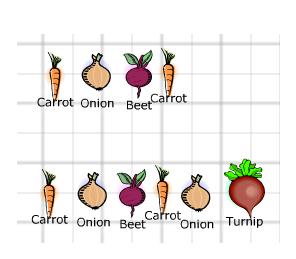
To prepare the soil, dig it deep; a few inches deeper than a carrot seems logical to me. Turnips can fit in with these root veggies and instead of where the beets would go. In my plot, I shoved soil aside in a 2 x 3 ish area and randomly placed onion sets then sprinkled 10 or 15 beet seeds, then sprinkled carrot seeds, a few turnip seeds, put some parsley on the edges, and some lettuce on the other edge. When the plants start to come up, I'll be able to see where the holes are and fill in with any of those shown above. I'll have a variety of greens all in the same place (turnips and beets make good stir-fry greens) and it will look interesting with all different textures of greens growing in the same place. "Filling in the gaps" will serve as succession planting so I don't have a glut of all the same thing all at the same time.
Monday, March 14, 2011
2011 Garden News! :)
Started planting herbs/marigolds in December and they're really doing well! Have since planted various heirloom tomatoes and peppers, more basil, more herbs, and a tray of flowers.
3/11 - Friday afternoon - on my way home breezed past Fort Collins Nursery and picked up onion sets and seed potatoes.
3/12 - Saturday - drove past the community garden plot on the way to school to plant seeds. Installed 3rd grow light on the grow tray, planted a flat of 72 with flowers: pansies, geranium, bachelor's buttons, snapdragons. Counted plants coming up in other flats.
3/13 - Sunday - Dragged L to Fort Collins Nursery to get early season seeds and some more winter squash seeds for variety. Afterward, headed to Spring Creek Community Garden plot (A2). I have been making plans using growveg.com but it's always best to stand in front of it and do the physical layout before planting anything. Took a rake over the surface to clean off last year's weeds, not a perfect job but it'll do. Planted spinach, lettuce, borage seeds and a few onion sets in the "strawberry patch". Tore up a section and planted turnip, carrot, beet, onion mix with some parsley and lettuce tossed in on the edges. Should be an interesting look when they start to pop up. Also laid out stones and took a veg ladder to eyeball the winter squash areas. Have a couple more stones to lay out and a couple of small areas to plant (another ~3 x 2 area of parsnips, turnips, lettuce, onions), 1' square sections of green onions, lettuce (in between walking bricks), that can all be done this week. Have largely neglected my beds here at home for the time being since they'll mostly be summer vegetables and potatoes (April planting).
Pictures to accompany shortly.
Saturday, June 27, 2009
Flea Beetles

Every year I battle flea beetles eating my plants. Flea beetles are very small black specks that can move very fast and chew small holes in the plants' leaves that look like bullet holes. They harbor the winter in the soil in adult form and emerge in the spring to feed on the plants. I've found that most of my plants have survived the flea beetle damage but I do help them out by applying Bacillus thuringiensis (Bt for short), a natural bacterium that inhibits reproduction of the beetles in the larval stage. Another management method is to plant a "trap crop" which they would rather feed on like radishes or eggplant. I have gotten into the habit of just planting radish seeds willy nilly through the garden - the greens are edible and if watered sufficiently, will provide nice tasty radishes, too. The radishes grow quickly and spread out, helping to keep weeds down.
Sunday, May 24, 2009
Slugs
We've had some really good rains lately. This is great for my newly planted seeds and my water bill BUT, great conditions for slugs and snails. I noticed some holes in my bean seeds last week and upon closer inspection today, I've got slugs. I went out and hand-picked off the ones I could see. I also put out some "shelters" (pieces of wood) that I'll turn over in the morning and gleefully squish all the slugs underneath. I read that putting copper sheeting around the edges of the raised beds will keep them away. This seems expensive and rather work intensive so here are a couple of other solutions.
Also from http://www.livingwithbugs.com/slug_bt.html
Beer-baited slug traps
There are many versions of homemade beer traps. The simplest is a shallow pan or plastic food container filled with an inch or two of cheap beer (old, stale beer works great). Bury the container so the lip is at about ground level so that slugs and snails can easily crawl into the trap. Suspend a cover that protects the beer but allows slugs and snails to enter. They will be attracted to the odor and fall into the beer and die. Empty the trap every day or two. Don't put dead slugs into the compost bin because they will rot and smell bad.
OR
Iron-phosphate based slug baits.
Both of these are harmless-to-human methods for attracting and disposing of slugs. I'll put out beer baits tomorrow and perhaps purchase some iron-phosphate base.
I also read in Rodale's Vegetable Garden Problem Solver (ISBN 978-1594863080) that coffee grounds spread around the soil will repel them. Apparently a 1% solution of caffeine will kill the guys. Also spreading "sticky" items on the soil will deter them - things such as pine needles. The problem is that these items are less sticky when wet and of course it's wet right now so it probably wouldn't work.
Also from http://www.livingwithbugs.com/slug_bt.html
Beer-baited slug traps
There are many versions of homemade beer traps. The simplest is a shallow pan or plastic food container filled with an inch or two of cheap beer (old, stale beer works great). Bury the container so the lip is at about ground level so that slugs and snails can easily crawl into the trap. Suspend a cover that protects the beer but allows slugs and snails to enter. They will be attracted to the odor and fall into the beer and die. Empty the trap every day or two. Don't put dead slugs into the compost bin because they will rot and smell bad.
OR
Iron-phosphate based slug baits.
Both of these are harmless-to-human methods for attracting and disposing of slugs. I'll put out beer baits tomorrow and perhaps purchase some iron-phosphate base.
I also read in Rodale's Vegetable Garden Problem Solver (ISBN 978-1594863080)
 that coffee grounds spread around the soil will repel them. Apparently a 1% solution of caffeine will kill the guys. Also spreading "sticky" items on the soil will deter them - things such as pine needles. The problem is that these items are less sticky when wet and of course it's wet right now so it probably wouldn't work.
Friday, May 8, 2009
Cukes and Beans Bed

Last year this bed contained summer squash, basil, and scarlet runner beans. The squash didn't do much because I had started it from seed too early and it didn't transplant well. However, I had a great crop of basil, some pretty zinnias, calendulas, and nasturtiums plus the beautiful vegetable ladder bursting with red blooms and dripping with scarlet runners.
This year, the cucumbers and beans are my "anchor plants" for this bed. I planted radishes near/around my cucumber hills to keep flea beetles away (or rather munching on the radishes instead). I interplanted nasturtiums with everything because they're beautiful, edible, and attract pollinating insects.
I have 3 different types of beans planted in this bed: "green" beans, Dragon Tongue beans, and Kentucky Wonder pole beans. We always like to have a nice mix of green, yellow wax, and purple bush beans so I planted ~6 sq ft of a mixture of those on the ends of the bed. I threw a short row of cosmos and dill seeds in the center of each of the "green" bean plots as well as some randomly thrown nasturtium seeds and kale. I wanted to try to do some sort of dry bean this year so I also planted ~ 3 sq ft of Dragon Tongue. We can eat some fresh and dry some to eat in the winter. I also tossed some pansy seeds among the beans. Last, I had some pole bean seeds from 2006 but didn't want to use another vegetable ladder. Instead, in the center of the Dragon Tongue plot, I interplanted mammoth sunflowers with the bean seeds to act as poles for the beans. If that isn't sufficient for the beans to climb, I can always tie some strings from the veggie ladders to stakes and let the beans go crazy. Technically, beans and sunflowers are "bad companions" so I'm considering this an experiment to see what happens.
I didn't want to leave the space under the vegetable ladders empty, so I searched for something that would go well with beans and cucumbers. Kale lists both as a good companion so I planted some Russian red kale, along with parsley for fun. Kale is a cool season crop and will do well with the shade from the cucumber plants, sunflowers, and beans once they really start growing.
Tuesday, May 5, 2009
Current Plant Prices
For my own garden, I start my vegetables from seed and rely on purchased plants to fill in gaps (for example, our Henry-cat likes to eat my pepper plants if he gets to them).
Checked on prices today for plants from nursery - in designing and planting companion gardens, I would simply purchase plants/seeds and pass along the bill to you. The only extra charge would be my time spent purchasing and transporting them. There was quite a bit of variety in herbs and vegetables available! I would not plant a garden using all pre-grown plants, but rather would combine some plants and some seeds. Gardens look sparse at first but fill in fast! I'm amazed at my jungle of basil each August.
organic vegetables
2 1/2" - $1.99
Potato Starts $0.99/lb
Onion sets $3.00/100
2 1/2" vegetable - $1.65
4" vegetable - $4.39
2 1/2" herbs - $2.69
3 1/2" herbs - $4.49
4 pk tomato $2.09
annuals
2" 6 pk/$2.89
3-4" 4 pk/$4.39
seed packets
$1.50 - $2.49
Sunday, May 3, 2009
2009 Garden Plan
The sketch below is the big-picture plan for my 2009 garden. Already I have made some changes in the roots/greens neighborhood, adding leeks and subtracting turnips. I have also decided to add in some Brassica Family crops in the fall when it's cool again: bok choy and broccoli perhaps.


Saturday, April 19, 2008
Yay Spring!
I am no expert but I think I have a good idea of what I'm doing so will document my gardening happenings as they progress. I grow all of my garden plants from seed I start myself.
I have decided to utilize an organic companion gardening system for the veggies that we use most. Last year I had problems with pollination - so this year I need to attract the good bugs with flowers and pretty things. I'm excited to put things in the ground!
This season so far:
4 trays of 72
2 trays of 25
Plants started from seed:
1/27: Chamomile, Cumin, Basil (Genovese, Lemon, Lime, Persian Anise, Purple Ruffles, Sweet), Lavender, Rosemary, Sage, Echinacea
2/16: Purple Salvia, Gaillardia, Lemon Balm, Pansy, Bachelor Buttons, Pennyroyal, Rosemary, Painted Daisy, Echinacea
3/2: Cosmos, Calendula, Shasta Daisy, Scarlet Flax, Nasturtiums
3/30: Purple Tomatillo, Tomato (Cherry SS100, Brandywine, Yellow Tomato), Eggplant
4/5: Cucumbers (Pearl Hybrid, Armenian Burpless, Burpee Hybrid II), Melon (Cantaloupe, Sweet Delicious, Moon and Stars Watermelon), Nasturtiums, Zucchini, Yellow Squash, Cocozelle Squash, Patty Pan Squash, Pumpkins (Jack o Lantern, Lil Jack), Gourds, Table King/Queen Acorn Squash, Cilantro, Fennel, Chamomile, Thail Hot Chile Peppers, Ancho Peppers, Chile Peppers
4/19: Lemon Grass, Oregano, English thyme, Sweet marjoram, Purple Ruffles Basil, Cumin, Bronze Fennel, Large Leaf Italian Basil, Catnip, Catmint, Penstemon, Hyssop, Monarda bee balm, Heather, marigold, painted daisy, African daisy, Cosmos, Zinnia, Yarrow, Alyssum, Snapdragon, Echinacea, Curly Parsley, Bachelor Buttons, Lunaria, Canterbury Bells, Coreopsis tinctoria, Azalea.
Subscribe to:
Posts (Atom)